
MOVING GUIDE
How to Load a Moving Truck: The Order a Crew Uses
Short answer
Load in tiers, from the front wall (the cab end) to the door. Heaviest and largest items go first, boxes are stacked by weight, gaps are filled and each tier is tied off before the next one starts. Here is the order a crew follows.
Two more rules hold the whole way through: boxes go in by weight, not by size, and nothing is left to lean or slide on its own. Rugs and the things you need first at the new place go in last, so they come off first. The steps below are what a crew does on the day, in order, so nothing is wasted and nothing slides.
- Tier 1 goes against the cab wall: the heaviest and largest pieces, such as the fridge, washer and dryer, kept upright.
- Each tier is built floor to ceiling: heavy boxes low, lighter boxes and soft things on top.
- Each tier is tied off with a strap or rope before the next one starts.
- Mom’s Attic, the space over the cab on U-Haul trucks from 15 feet up: lamps, frames and other fragile things.
- The last tier at the door: rolled rugs and the box of things you need first.
Not shown: mattresses, box springs and sofas stand on end against a side wall.
Step 1: Stage the load before anything goes on the truck
A lot of time on moving day is saved before the first lift.
- Clear a path from every room to the front door and from the door to the truck. Move rugs, shoes and low furniture out of the way.
- Take apart what comes apart: bed frames, table legs and anything else that is awkward when it is whole. Bag the screws and tape the bag to the piece. U-Haul suggests removing table legs when you can.
- Put mattresses in mattress bags, and wrap furniture in pads or moving wrap. U-Haul also says to keep tape off wood finishes.
- Group the pieces by type in the garage, driveway or front room: appliances together, mattresses together, boxes sorted by weight.
- Have your gear ready. Pads, a dolly, tie-down straps or rope, gloves and tape. U-Haul rents dollies and furniture pads, and an appliance dolly is made for refrigerators, washers and stoves.
Tell us what you already have when you ask for a quote. Then we know what to bring.
Step 2: The heaviest and largest items go on the front wall
Everything starts against the front wall of the cargo area. U-Haul's own advice is to load the heaviest items first, such as the washer and dryer, and to use a dolly to move them. U-Pack says the same: the largest and heaviest items go first, against the walls.
Heavy weight low and forward gives you a solid base for everything stacked above it. A good front tier looks like this:
- Refrigerator, washer and dryer, kept upright.
- Large dressers, bookcases, a sectional or a three-seat sofa base.
- The dining table, once the legs are off.
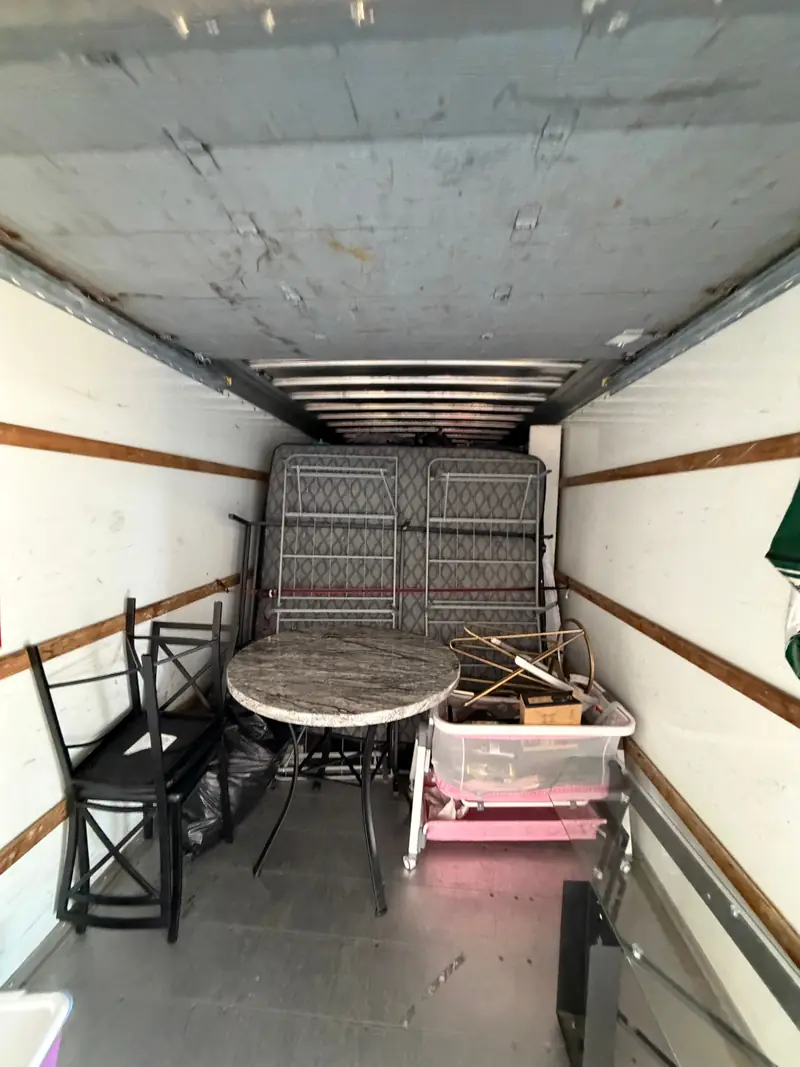
Pieces with doors or drawers go in with the drawers and doors facing the front of the truck, so nothing swings open. Slide pads under and over anything that might scratch.
Step 3: Build in tiers, floor to ceiling
A tier is one stacked section across the width of the truck. Finish it from floor to ceiling before you start the next one. Both U-Haul and U-Pack describe loading this way.
Inside a tier:
- Furniture makes the base. Boxes are stacked on and around it.
- Heavier boxes go at the bottom. Lighter boxes and soft items go on top. U-Haul says to stack boxes by the weight of what is inside, not the size of the box. A small box of books belongs on the floor. A big box of pillows belongs near the top.
- Mattresses and box springs stand on end. Put them in bags and stand them against a side wall. U-Haul says to load mattresses early, on their side against a wall, and its 15-foot loading guide says to stand them upright in their own bags.
- Sofas go on end too when they fit, so they take up less floor.
- Nothing leans on its own. If a piece must lean, lean it toward the tier you already built. U-Haul gives the same advice.
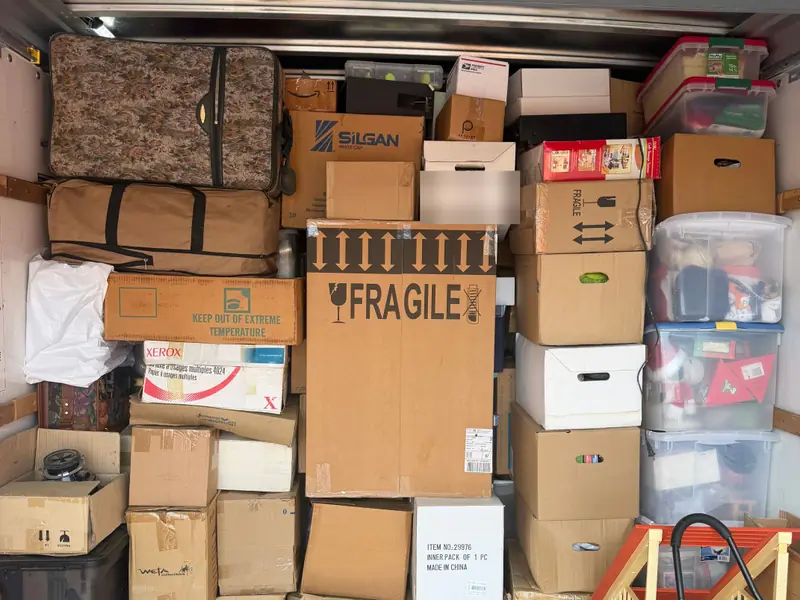
Step 4: Fill the gaps, then tie off the tier
Gaps are what let a load shift. After each tier, look for open spaces and fill them.
- Slide flat boxes such as framed pictures, mirrors and TV boxes into the narrow gaps between pieces.
- Plug small holes with furniture pads, pillows, cushions or soft bags of linens.
- Check that the top of the tier is reasonably level, so the next tier has something steady to sit on.
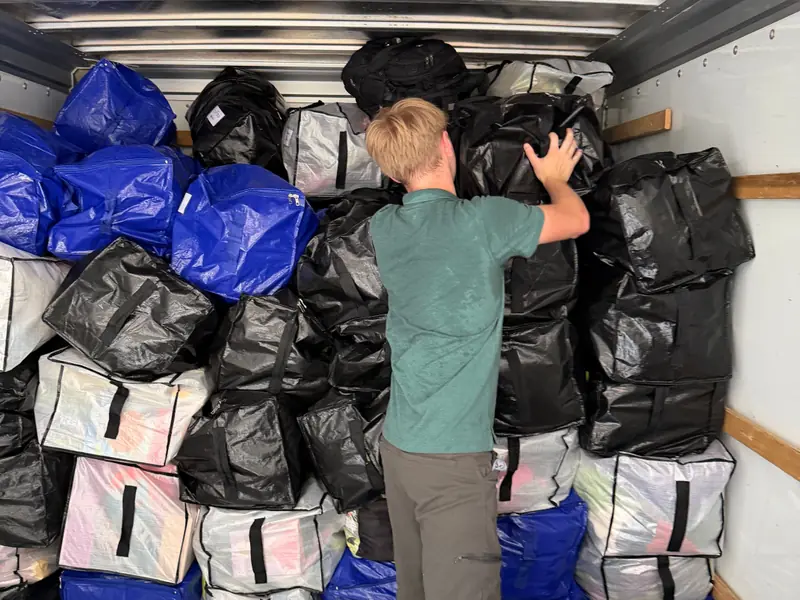
Then tie it off. U-Haul says to use tie-down rope to secure each row before beginning the next one, and U-Pack says to tie off each tier too. Tie-downs belong between the tiers, not just once at the end, because a strap on the last tier does nothing for the front of the load.
Step 5: Use Mom's Attic for fragile things
On U-Haul trucks from the 15-foot size up, there is a small space over the cab called Mom's Attic. U-Haul describes it as space made to carry fragile valuables apart from heavy boxes and furniture. The 10-foot truck lists none. It suits lamps, picture frames, small electronics, keepsakes and decorative items.
Our guide on what size rental truck you need lists which trucks have one. Load it early, by hand.
Step 6: The last items in are the first items you need
Load in this order for the final tier near the door:
- Rugs, rolled and wrapped. U-Haul says rugs go last so they come off first.
- A box of the essentials you need on arrival: phone chargers, toilet paper, a few tools, medicine, snacks.
- Light items that should not be under anything.
Do a last check before the door closes. Heavy items are strapped, fragile items are in the safe spot and lightweight things are on top.
Ramp and dolly safety
Ramps and dollies put a heavy load on a narrow, sloped path, so slow down here.
- Use a dolly or hand truck whenever you can. U-Haul notes that its ramp is designed for safe rolling loads.
- Not every truck has a ramp. The 10-foot U-Haul truck lists none, and the 15-foot U-Haul ramp is about 2 feet 2 inches wide. Penske lists a 1,000-pound capacity ramp on its 16-foot truck. Check the ramp's weight limit before you roll anything heavy up it.
- U-Pack's dolly tips: center the blades under the load, keep the heavier items on the bottom, do not stack above chest level, walk with the dolly in front of you, and get help on ramps and steps.
- Lift with your legs, not your back, and keep boxes light. U-Pack gives under 40 pounds as a good rule of thumb for a box.
- Ask for a second person on any ramp trip with an appliance.
Mistakes a crew sees, and how to avoid them
- Boxes first, furniture later. Stacked boxes get buried and then crushed or moved around. Furniture comes first because it is the base.
- Heavy things loaded last. They end up at the door, where they cannot be tied off or stacked low.
- Leaving gaps. A loose tier shifts at every stop and turn. Fill the holes.
- One tie-off at the end. Tie off each tier as you go.
- Lying mattresses flat. They steal floor space. Stand them on end in bags.
- Mixing heavy and light boxes by size. Sort by weight, not by what looks neat.
- Loading fragile things where heavy things might lean on them. Keep them in the attic or high in a protected tier.
- Packing the day-one box at the back. It needs to be near the door.
When a crew makes sense
Loading is the heaviest part of the day. If you have a washer, a dresser and a pile of heavy boxes, two people with the right gear can build each tier carefully while you handle everything else. We can load the truck, unload it, or both. One customer in Louisburg wrote this about us:
★★★★★
“Hard working and very professional young men. They are efficient and work hard & fast. Did not break anything. I would use them again!”
Our loading and unloading page shows what we do differently for a truck and a container. Containers have their own order, covered in how to load a PODS or U-Box container. When you ask for a quote, send the truck size, both towns or ZIP codes, any stairs, and the heavy items. Joey will text you back with a plan.