
MOVING GUIDE
Moving While Pregnant: What to Hand Off
Short answer
Follow your doctor or midwife on what you should and shouldn't do. Then hand off every lift, pack in short sessions, and spend moving day pointing instead of carrying. Book help for both the old place and the new one so the heavy work is done at each end.
This guide is about the practical side: who carries what, how to pack without wearing yourself out, and how to plan the day so you can rest when you need to. It is not medical advice, and nothing here replaces what your own care team tells you.
First: what your doctor or midwife says
Ask at your next appointment, before you plan anything else. Bring the questions that matter for a move:
- How much can I lift, if anything, right now and later in the pregnancy?
- Is bending, kneeling or climbing a step stool OK?
- Are long days on my feet OK, and how often should I sit down?
- Is a long drive OK, and how often should I stop?
- Should I avoid paint fumes, cleaning products or dusty attics?
Write the answers down and share them with whoever is helping. When a friend says "just grab that one box," you can point to the list instead of deciding on the spot. The plan below works for any trimester, because it puts the lifting on other people from the start.
Jobs to hand off completely
Some jobs are easy to give away and hard to do well while pregnant. Hand these off and don't take them back on the day:
- All furniture. Dressers, beds, couches, tables, desks, and anything that needs two people.
- Boxes. Even "light" boxes add up over dozens of trips. Let someone else carry every one.
- Stairs with anything in your hands. Walk the stairs with your hands free.
- Ladders and step stools. Taking down curtains, high shelves and wall mounts goes to someone else.
- The attic, crawl space and garage rafters. Hot, dusty and awkward places are a good job to give away.
- Loading the truck or container. A tight, well-loaded truck takes a lot of lifting and climbing on the ramp.
Our home moving help covers the carrying, loading and unloading. If you're not sure how big a crew you need, our guide on how many movers to book walks through it by home size.
Packing in short sessions
Packing is the part of a move you can do sitting down, a little at a time. A few ways to make it easier:
- Start early. Spread the packing out so you never need one long day of it.
- Pack one shelf or one drawer per session. Small wins are easier to stop and start.
- Sit at a table. Have someone bring the empty boxes to you and carry the full ones away.
- Use small boxes. Small boxes stay light, which matters for whoever is carrying them, too.
- Label two sides of every box with the room it goes to. That saves you from directing every box on the day.
- Pack a "first night" bag with medications, prenatal vitamins, phone chargers, snacks, water, toiletries, and a change of clothes. That bag rides with you, not on the truck.
If packing is more than you can or should do, we offer packing help, quoted separately from the move itself. Tell us which rooms you want packed and which you'd rather do yourself.
Moving day: your role
On moving day, your job is to be the person who knows where everything goes. That is a real job, and it keeps the crew moving.
What helps us most at the door:
- A quick walkthrough at the start. Show the crew what goes, what stays, and anything fragile.
- Name what's not going. Put a sign or tape on furniture that stays so nothing gets loaded by mistake.
- A chair for you. Set one by the front door or in the room where you'll direct traffic, and use it.
- Water and snacks within reach, and a bathroom left clear and unpacked.
- A cool or warm place to rest. If it's hot or cold out, pick one room or the car to step away to.

Things that slow a job down for any customer: boxes left open, drawers full of loose items, and furniture nobody decided about yet. Settle those the day before, and moving day goes faster for everyone.
Setting up the nursery and bedroom first
At the new place, your bed matters more than anything else. Ask the crew to unload and set up the bedroom first, then the nursery, then the kitchen.
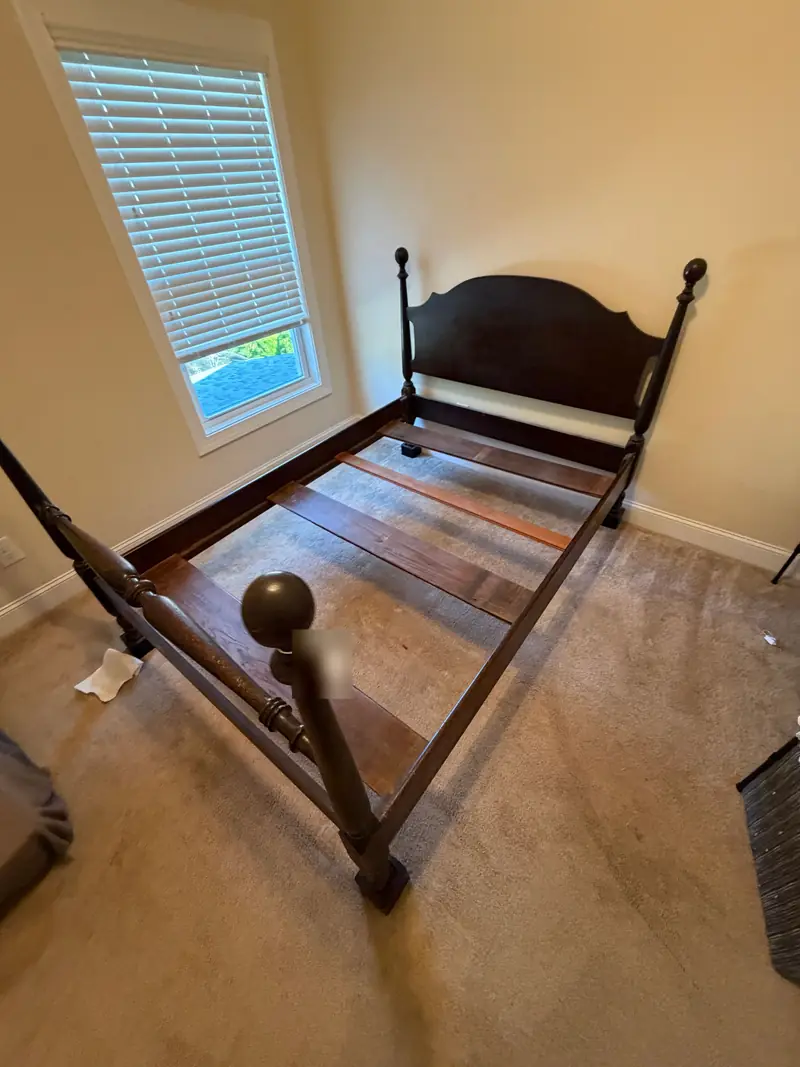
- Your bed. Have it put together and the mattress on it before anything else, so you have a place to lie down.
- The crib and changing table. If these are already assembled, tell us so we can plan the carry. If they need to come apart or go back together, tell us that when you ask for a quote so we plan the time and bring tools.
- The rocking chair or glider. Set it where it belongs on the first trip, not in a pile in the corner.
- Kitchen basics. A few cups, plates and the coffee maker get you through the first morning.
Tape a simple floor plan to each door at the new place, with where the bed, crib and dresser go. The crew can place each piece right the first time, and nobody has to move a dresser twice.
Booking help for both ends
The heavy work happens twice: once loading at the old place and again unloading at the new one. Plan help for both, so you're never the one finishing a truck at night.
You can book loading only, unloading only, or both. If both addresses are in our area, a two-address move is one job: we load, follow the truck and unload.
When you ask us for a quote, it helps to tell us:
- Both addresses, and any stairs, elevators or long walks at either one.
- Whether you're renting a truck, booking a container, or want us to quote a truck.
- Which pieces need to come apart or go back together, like the crib or your bed.
- The rooms you want set up first at the new place.
- What equipment you already have, so we know what to bring.
Joey calls you back to talk it through, and nothing is booked until you agree on the plan and price. Every job has a two-person, two-hour minimum, and daytime labor for 2 movers starts at $125 per hour. One customer in Garner wrote:
★★★★★
“They were prompt, prepared, respectful and efficient. It made moving much easier, I would definitely use them again!”